
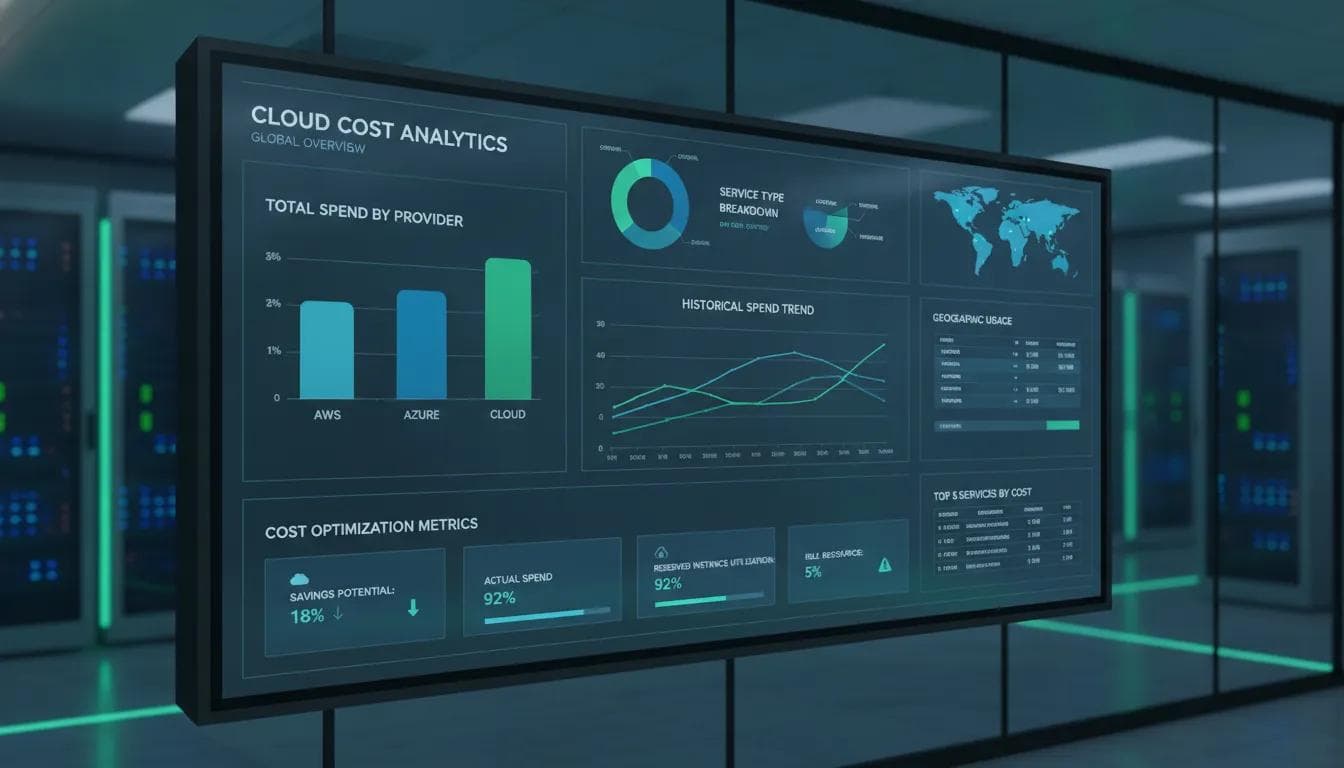
Nearly 94 percent of companies admit to having avoidable cloud spend that drains their budgets. This waste usually stems from a lack of financial discipline. IT leaders must now pivot to a formal FinOps governance model.
Cloud cost optimization is a strategic practice that uses financial discipline to maximize the business value of your technology spend. It moves beyond cost-cutting by uniting finance, tech, and ops teams into one framework. This ensures that every dollar spent drives a clear return. According to research from Academia.edu, FinOps is a crucial framework for addressing high spend by helping teams work together across the entire company. By building this shared culture, IT directors can find hidden waste and make better choices about multi-cloud or hybrid-cloud systems. A strong FinOps model turns cloud spend from an uncertain cost into a strategic tool that helps the whole business grow and stay competitive.
Managing cloud costs is no longer just a task for the engineering team. As cloud waste grows, IT leaders must treat financial governance as a top priority. The FinOps Imperative: Why Cloud Cost Optimization Now Requires Executive Attention highlights why this cultural change is necessary. The process starts by implementing a structured FinOps framework that aligns every team around a shared goal of maximizing business value from every cloud dollar spent.
The FinOps Imperative: Why Cloud Cost Optimization Now Requires Executive Attention
Cloud costs are rising fast for many growing firms. Recent data shows that global cloud spend is now nearing $500 billion. This high cost creates a major risk for firms that do not have a clear plan. Many leaders find that their cloud bills are much higher than they expect. One study found that 94% of firms have cloud spend they could avoid. These costs often go unnoticed until the month ends. At that point, it is too late to make easy changes. This is why cloud cost optimization is now a top goal for IT leaders.
For mid-market IT directors, the cloud is no longer just a tech tool. It is a core part of the business budget. Yet many teams lack a clear way to manage these costs. They buy more space than they need or keep old apps running. This lack of control can drain a company's funds. Leaders must move beyond simple cost cutting. They need a smart way to get more value from every cloud dollar.
A Cultural and Money Discipline
FinOps is the best way for firms to handle these issues. It is a cultural practice and financial discipline that helps firms get the most out of their cloud use. This method is not just about tools. It is about how people and teams work. FinOps is also expanding to help with managing cloud infrastructure costs in private and hybrid clouds. It gives leaders the facts they need to make smart choices in real time.
The core of FinOps is ownership. It asks each team to take charge of the costs they create. This shift helps teams see the link between tech choices and bills. When a dev team starts a new service, they see the cost right away. This fast loop allows for quick fixes. It stops small slips from turning into huge bills. Firms that use this method can grow their tech without losing control of their funds.
Uniting Teams for Better Value
One major win of FinOps is how it brings people together. It unites finance, tech, and operations teams to share the work of managing cloud spend. In many firms, these teams do not talk enough. Finance sets a fixed budget while tech builds tools. FinOps breaks down these silos. It puts everyone on the same team with the same goal: boosting value for the firm.
This teamwork is vital for long-term success. It ensures that tech choices align with business goals. This shared view helps firms move faster in three ways:
- Finance teams gain better insight into future spend.
- Tech teams learn to build tools with cost in mind.
- Operations can optimize performance while keeping costs low.
They can launch new products without the fear of a surprise bill. It turns the cloud from a risky cost into a clear asset for the company.
Why Executives Must Lead Now
IT directors must lead this shift from the top down. A cultural change like FinOps needs strong support from the board. Without it, teams may go back to their old ways. Leaders can set the tone by making cloud success a key goal. They can also give teams the training they need. This focus on FinOps helps firms stay lean. It prepares them for growth in a cloud-first world.
The time to act is now. As cloud use grows, the risk of waste also grows. Waiting to fix these issues will only cost more in the long run. By starting a FinOps plan, leaders can stop waste before it starts. They can also ensure that their cloud spend drives a high return. This smart move helps the entire firm win. It proves that the IT team is a true partner in the company's success.
Identifying the Hidden Waste in Your Cloud Infrastructure
Cloud bills often grow much faster than IT teams expect. For many firms, costs can jump from $5,000 to $50,000 per month in just a few quarters. This fast growth makes it very hard to keep budgets on track. Without a clear plan for managing cloud infrastructure costs, waste starts to build up in every part of the system.
The risk of rapid cost growth
When cloud spend grows too fast, it can hurt the bottom line. Large bills often come as a surprise to finance heads. This happens because cloud tools are so easy to turn on. Any team can start a new project with a few clicks. But without a strategy for optimizing public cloud spend, those small costs turn into big problems. Firms must watch their spend as they grow to stay in control.
Common sources of cloud waste
Most waste comes from tools that stay on when no one needs them. Finding these idle resources is a key part of lowering your bill. For case, a test server might run all night while the team is away. Other common sources of waste include:
- Overprovisioned servers that use only a small part of their power
- Orphaned storage disks that stay on after a machine is gone
- Unused reserved slots that you paid for but do not use
- Old snapshots and data backups that are no longer needed
When you pay for speed and space you do not use, your value drops. Orphaned storage is a trap that many firms fall into. The cloud firm charges you for disk space even if no machine is linked to it. Unused reserved slots also hurt your budget. You might pay for space ahead of time to save money. But if those slots stay empty, you are just losing cash. Finding these gaps is a vital step in cloud cost optimization.
The tracking visibility gap
Seeing where your money goes is not a simple task. A report from the GAO found that inconsistent tracking stops groups from showing costs well. Many teams do not have one set way to track their cloud spend. This lack of data makes it hard to see true savings. When your data is messy, finding and cutting waste is nearly impossible.
Good cost management needs a full view of all your cloud tools. If you cannot see a tool, you cannot control what it costs. IT leaders need rules that link every part of the cloud to a team or project. This step makes everyone more careful about what they use. It helps teams see the price of their choices in real time. Clean data turns cloud spend from a bad surprise into a tool that helps the business win.
Multi-Cloud vs. Hybrid-Cloud: Which Strategy Optimizes Your Cloud Costs?
Picking between a multi-cloud or a hybrid-cloud path is a big step. Both models help you manage your tech, but they hit your budget in new ways. Finding the right mix is key when managing cloud infrastructure costs. Each choice brings its own set of risks and gains for your firm. You must look at how each setup affects your long-term spend.
Design and Cost Control
A multi-cloud plan uses two or more public clouds. This helps you avoid being stuck with one brand. It also lets you pick the best tools for each task. But it can make your bill hard to read. You have to track spend across many screens. This often leads to waste if your team has no clear plan. You may end up paying for tools you do not use.
Hybrid-cloud blends private servers with public cloud tools. This is a common pick for firms that need to keep data on site. FinOps was first built for the public cloud, but it is now growing. Teams use these cloud optimization tools for both public and private clouds to save money. This helps keep costs low as you use your own gear. It also gives you more control over where your data stays.
Key Choice Factors for IT Leaders
To win at cloud cost optimization, you must look at how you manage your tools. A multi-cloud cost management strategy needs strong rules to work well. Without them, you might pay for things you do not use. You also need to look at how much time your staff spends on each cloud. Some teams find that managing two clouds takes twice the work. This can lead to a rise in costs that cancels out any savings you found.
Criteria
Multi-Cloud
Hybrid-Cloud
Cost Governance Complexity
High; many bills to track
Medium; mix of old and new spend
Vendor Lock-in Risk
Low; easy to move work
Medium; tied to your own gear
Management Overhead
High; needs skills for many clouds
Medium; uses current IT skills
Scalability
Limitless; use all public sites
Set by your own server limits
FinOps Tooling Support
Full; most tools work here
Growing; now works for private gear
Picking the Right Model
Your choice should match your goals and what your team can do. Multi-cloud works best if you need to grow fast and want to stay free from one brand. It gives you the power to ask for better rates. Hybrid-cloud is great if you have big costs from old systems you still need to run. It lets you move work to the public cloud when your own servers get too full. Both paths need a firm hand to keep costs from getting out of hand. Talk to your team about where the waste is before you make a move. A clear view of your spend is the first step to a better cloud plan.
Building a Cross-Functional FinOps Culture in Your Organization
Managing cloud costs is more than just a task for your IT team. It is a cultural shift that brings tech, finance, and business leaders together to drive value. This shift, known as FinOps, focuses on maximizing the business worth of your cloud spend across all platforms.
Fostering shared accountability
In many firms, IT teams spin up resources while finance teams struggle to track the bills. This gap creates waste and risk. A true FinOps culture breaks these silos by fostering collaboration between teams. When every leader takes ownership of their cloud use, the whole company wins.
Building the roadmap
Moving to a FinOps model takes a clear plan. It starts with people and moves into better processes. By following these steps, you can start managing cloud infrastructure costs with more precision and less stress.
- Assign cross-functional owners. Form a team with leaders from Finance, Engineering, and Ops. This group sets the goals and makes sure everyone speaks the same language about cloud spend.
- Use showback and chargeback systems. Make cloud costs visible to the teams that incur them. When departments see their real spend, they tend to use resources more wisely.
- Set clear cost policies. Create tagging rules that mark every cloud resource by project or owner. This makes it easy to see where your money goes and who is in charge of it.
- Automate cost alerts. Set up tools to find odd spend patterns fast. Auto-alerts help you catch leaks before they turn into large bills at the end of the month.
- Hold regular FinOps reviews. Meet often to look at spend data and adjust your plan. These checks keep the culture alive and help you find new ways to save.
Driving long term value
A strong culture turns cloud spend from a surprise cost into a strategic asset. By linking tech choices to business goals, you gain better control over your budget. This method helps you scale fast without losing track of your bottom line.
Negotiating Better Cloud Vendor Agreements: How Technology Brokerage Creates Leverage
The Leverage Gap in Cloud Buying
Most IT leaders feel they have no power when they deal with giant cloud firms. Large firms like AWS, Azure, and GCP often set strict terms. Mid-market firms often sign these deals because they feel they have no other choice. This lack of power often comes from a lack of data.
If you do not know exactly how you use the cloud, you cannot ask for a better price. Poor visibility is a common trap for many groups. When you cannot track your spend, you cannot prove that a vendor should give you a discount. This gap makes it hard to win at the table.
The Government Accountability Office (GAO) found that poor tracking steps stop many groups from seeing real savings. To get a better deal, you must first get a clear view of your needs. You need a partner who can help you find your voice. To gain power, you need a smart way to look at your options.
A Strategic Path for Vendor Review
The Technology Brokerage-as-a-Service framework from MR2 Solutions gives you this path. It uses three main pillars to help you find the best value. Each one works to give you more pull in every deal:
- People: Experts who serve as fractional IT leaders and know how to talk to vendors.
- Process: A set method to grade each vendor based on more than just price.
- Portfolio: A large list of over 400 vetted firms to give you more choice.
These pillars work together to level the playing field. With this framework, you never have to settle for a bad deal. You can let vendors compete for your work based on your real needs. This structured path ensures that you always get the best fit for your long-term goals.
Achieving Results through Vendor Neutrality
Staying neutral is vital for cloud cost optimization. Many sales reps want you to buy one certain brand. This bias can cost you a lot of money over time. MR2 Solutions is different because we stay neutral. We do not work for the vendors.
We work for you. You sign your deals straight with the firms you choose. This ensures our advice is always based on what is best for your firm. This neutral way of working leads to real, fast results. Our method can help you find 20-40% savings on your tech costs.
It also cuts down on the time it takes to make a choice. Many firms spend months trying to pick a cloud provider, but our system can cut that time to just a few weeks. This means you can stop paying too much and start growing much sooner. You get the leverage you need to win.
Measuring What Matters: Key FinOps Metrics Every IT Director Should Track
Tracking the right data is the first step in optimizing public cloud spend. Many mid-market firms struggle with cloud bills because they lack the tools to see where money goes. A report from the GAO found that poor tracking often keeps groups from seeing their real savings. To fix this, IT leaders must move beyond monthly bills and focus on business value.
Unit Economics and Business Value
Unit economics map cloud costs to business output. Key metrics include cost per user or cost per sale. Instead of just seeing a rise in cloud spend, you see how much it costs to help one new client. This shift helps teams treat cloud as a tool for growth. It also allows for better managing cloud infrastructure costs across complex setups.
Resource Use and Cloud Waste
Waste is a big hurdle in cloud cost optimization. You should track use rates to find idle tools that still cost money. High waste often comes from buying too much power or leaving disks on after a task ends. By watching these rates, you can right-size your setup to match real needs. This check ensures every dollar spent on cloud tools directly helps a live job.
Price Models and Forecast Accuracy
Smart FinOps relies on good buying and clear plans. You must track your reserved plan use to ensure you get the best rates from vendors. Low use means you pay high spot prices for steady work. Forecast accuracy is also vital for IT directors. It shows how well your team predicts future needs. Good plans prevent budget shocks and help link your tech spend with your long-term goals.
From Cost Center to Competitive Advantage: The Strategic Case for Cloud FinOps
Most leaders see cloud bills as a fixed cost. They look for ways to cut spend just to save money. But true cloud cost optimization is a tool for growth. When you master your cloud spend, you stop wasting cash on idle tools. You can then use those savings to fund new projects. This shift turns a cost center into a source of power for your company.
Reinvestment in new ideas
Savings from cloud work should go back into the business. Companies can use these funds for research or new tools. This needs a cultural shift in how teams work together. A good framework brings tech and finance teams together. They stop fighting over bills and start looking for value. This teamwork builds better products. It ensures that money spent on tech drives real business results.
By moving funds to high-growth areas, you gain an edge over rivals. Many firms stay stuck in old spend patterns. They do not have the cash to try new ideas because it is tied up in waste. A smart strategy lets you pivot fast. You can invest in the tech that drives your brand forward. This keeps your firm at the front of your industry.
Faster decision cycles with TBaaS
Speed is vital in the modern market. Old ways of buying tech take too much time. Many firms spend six or seven months just to make one choice. This delay hurts your ability to react to new trends. The Technology Brokerage-as-a-Service framework fixes this problem. It cuts decision cycles from months to weeks. This gets you tools without the wait.
When you decide faster, you ship faster. You can set up new cloud tools before your rivals do. This speed helps you grab market share. It also reduces the risk of picking the wrong vendor. A structured approach ensures you get the best deal for your needs. This helps you keep managing cloud infrastructure costs while you scale. You spend less time on paperwork and more time on growth.
Lasting business growth
Strategic FinOps beats one-time wins. It builds a system for long-term health. Federal reports show that steady tracking is the best way to prove real savings. When you track every dollar, you know exactly where your ROI comes from. You can scale your cloud use without fear of a surprise bill. This insight makes it easier to set budgets.
This clarity allows for better planning and less stress. You can commit to big projects with pride. Cloud FinOps gives you the data you need to make bold moves. It ensures that every cloud resource serves a clear business goal. This level of care is what sets market leaders apart from everyone else. Your cloud spend builds your future.
Frequently Asked Questions
Why do many firms struggle to track cloud savings?
Many firms find it hard to show their cloud success because they do not have steady ways to track data. According to the GAO, unsteady tracking and reporting is a major barrier to showing how much money is actually saved. Mid-market IT leaders should set up clear paths for reporting usage across all teams. Without these steps, it is very hard to prove the value of your cost saving efforts to the rest of the business.
What are the core pillars of cloud cost management?
Good cost saving relies on four areas: visibility, rules, design, and buying plans. Visibility lets teams see where money goes each day. Rules set limits on who can spend and how much. Design ensures apps use only the power they need to run well. Finally, buying plans use long-term deals to get lower rates. These pillars help leaders build a strong financial base for all their digital systems and cloud tools.
How does Tech Brokerage improve cloud cost saving?
Tech Brokerage-as-a-Service provides a clear way to pick vendors and sign contracts. This process can help firms find 20-40% savings on their tech costs. It also makes the work go much faster. Instead of taking six months to make a choice, firms can finish in just a few weeks. This gives IT leaders the power they need to get better deals and cut total spend without losing any speed or performance.
What are the top cloud cost saving steps for 2026?
Future plans focus on bringing cost management to both private and public cloud setups. Leaders should move toward a single view of all their assets to track costs better. Based on expert research, the goal is to get the most value by taking full ownership of how teams use tools. This means building a culture where tech and finance groups work together each day to check bills and fix problems before they grow.
Ready to build a better cloud cost strategy?
Every month you wait to fix your cloud spend is money lost that your firm cannot get back. Without a clear plan, your bill will keep growing while your team struggles to track waste and vendor terms slow down your growth. You can start saving now by setting up a framework that gives you full control and cuts your tech wait times from months to weeks. The cost of doing nothing is a large gap between your budget and your needs that drains your cash flow each day. By acting now, you can turn your IT department into a strong asset for the whole business.
Ready to schedule? Call (949) 342-8889 to schedule a strategic FinOps consultation with MR2 Solutions' technology brokerage team.