Many business leaders find themselves grappling with the same technology challenges: legacy systems that hinder agility, security threats that keep them up at night, and unpredictable IT costs that make budgeting a nightmare. These issues often stem from a reactive approach to technology. A strategic Enterprise IT framework offers the solution, providing a proactive plan to strengthen security, improve efficiency, and create predictable budgets. It transforms your technology from a source of problems into a powerful enabler of business goals. This article will guide you through overcoming these common hurdles and optimizing your infrastructure to support sustainable growth and innovation.
Key Takeaways
- Make every technology decision a business decision: Shift your mindset from viewing IT as a cost center to seeing it as a strategic growth driver. Ensure every technology investment is directly tied to a specific business objective, like improving efficiency or strengthening security.
- Build a resilient and integrated foundation: Your enterprise IT is an ecosystem where hardware, software, and network infrastructure must work together seamlessly. A cohesive system is easier to manage, scale, and secure, providing the stability needed to support your entire organization.
- Use data and expert partnerships to stay ahead: You can't optimize what you don't measure. Use performance analytics to make informed decisions and partner with technology experts to fill skills gaps, manage complex vendor relationships, and adapt to future trends.
What is Enterprise IT?
When we talk about Enterprise IT, we're referring to the entire technology ecosystem—hardware, software, and services—specifically designed to meet the demands of a large organization. Think of it less as a collection of tools and more as the strategic central nervous system of your business. Unlike the technology you might use at home or in a small office, enterprise-class IT is built to support complex operations, handle massive amounts of data, and scale alongside your company's growth. It’s the foundation that enables your teams to collaborate effectively, your operations to run smoothly, and your business to achieve its strategic goals. Making the right choices in this area is crucial, as your IT infrastructure directly impacts everything from daily productivity to long-term profitability.
How it differs from standard IT
The core difference between enterprise IT and standard IT comes down to strategic alignment. While a small business might choose software based on price and immediate features, a large organization needs technology that supports its overarching business objectives. As one expert puts it, enterprise IT is not like the IT products people use at home or what a small business might use. The focus shifts from simple functionality to long-term value, requiring solutions that are exceptionally robust, secure, and capable of supporting seamless collaboration across numerous departments, teams, and even countries.
Key differences in scale and complexity
The sheer scale of a large company introduces a level of complexity that standard IT solutions simply aren't built to handle. Enterprises have complex IT needs that are very different from smaller businesses, from supporting thousands of users to managing intricate global supply chains. Enterprise systems must be able to process enormous volumes of data, integrate with a wide array of other platforms, and maintain high performance under constant, heavy use. This complexity demands a much higher standard for reliability and support to ensure that critical business operations continue without interruption.
The resources it requires
It’s true that enterprise IT solutions often come with a higher price tag than their consumer or small-business counterparts. However, this initial cost is just one piece of the puzzle. The true investment is measured by the total cost of ownership, which includes setup, ongoing maintenance, and eventual replacement. This comprehensive approach ensures the technology you choose is a sustainable asset, not a short-term fix. For large companies, this extra cost is usually worth it to ensure business runs smoothly. Making a precise technology investment is key to turning that cost into a powerful business outcome.
What are the Core Components of Enterprise IT?
To understand enterprise IT, it helps to look at its core building blocks. Think of it as a high-performance vehicle—it’s not just one part, but a sophisticated system of components working in perfect sync. Each piece plays a critical role in driving your business forward. From the physical engine to the onboard computer and the fuel that powers it, every element is essential. In the world of enterprise IT, these core components are hardware, software, the network, and data. Let's break down what each one means for your organization.
Hardware: The physical foundation
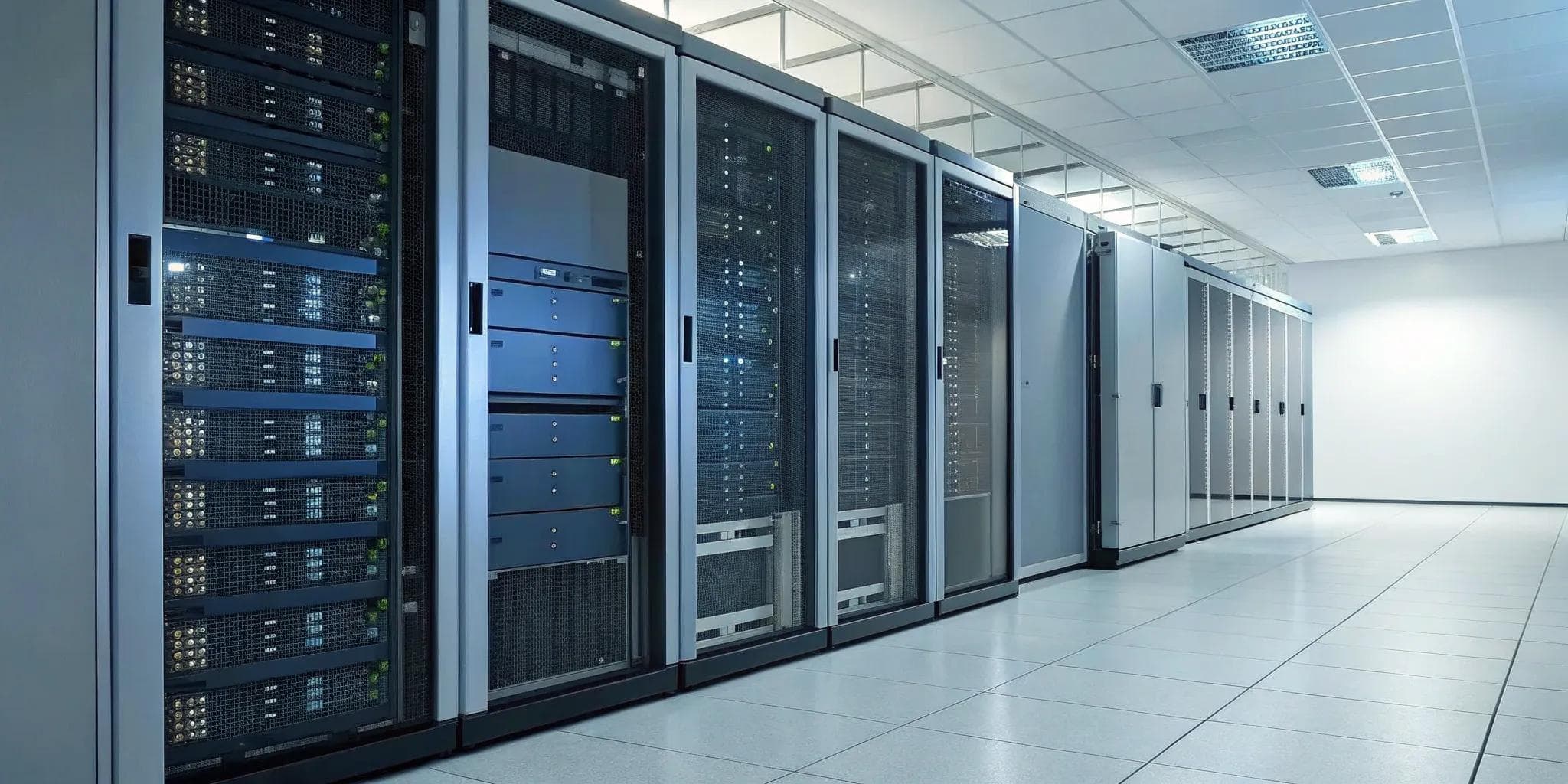
Hardware is the tangible backbone of your IT infrastructure. This goes far beyond employee laptops and desktops. We’re talking about the heavy-duty equipment that powers your entire organization: servers, data centers, storage arrays, and other physical systems. Unlike consumer-grade products, enterprise-class IT hardware is specifically engineered to meet the demands of a large organization. It’s built for high performance, continuous availability, and the ability to scale as your business grows. Choosing the right hardware is a foundational decision that directly impacts the speed, reliability, and resilience of all your business operations. It’s the solid ground upon which your entire technology stack is built.
Software: The operational ecosystem
If hardware is the body, software is the brain. It’s the collection of programs, applications, and operating systems that bring your hardware to life and enable your teams to do their work. This includes everything from core operating systems to massive, business-critical applications like Enterprise Resource Planning (ERP) and Customer Relationship Management (CRM) systems. Enterprise software must meet much higher standards for reliability, security, and scalability. It creates a digital ecosystem that automates workflows, facilitates collaboration, and provides the tools your employees need to be productive. The key is ensuring these different systems are integrated to work together seamlessly, creating a unified and efficient operational environment.
Network: The connective tissue
The network is the communications backbone that connects all your hardware and software, allowing them to share information. It’s the connective tissue of your IT environment, consisting of routers, switches, firewalls, and both local and wide area networks (LANs and WANs). For a large enterprise, the network is a critical utility. It must be fast, secure, and always available to support a distributed workforce, constant data flow, and real-time communication. Effective IT Operations focus on maintaining this connectivity, ensuring that information gets where it needs to go without interruption or security risks. A robust network is essential for keeping your business running smoothly.
Data: The strategic asset
Data is the fuel that powers your enterprise. It includes everything from customer information and sales figures to operational metrics and market trends. In today's business landscape, data is no longer just a byproduct of operations—it's one of your most valuable strategic assets. Effectively managing, securing, and analyzing this data is what separates industry leaders from the rest. By harnessing your data, you can gain powerful insights that lead to smarter, evidence-based business decisions, drive innovation, and create more efficient processes. A strong enterprise IT management strategy recognizes that data is the key to unlocking a significant competitive advantage and achieving long-term growth.
What are the Strategic Benefits of Enterprise IT?
Enterprise IT is more than a support function; it's a strategic driver for your entire organization. When you approach technology with a clear plan, you move from simply reacting to IT issues to proactively using it to achieve core business goals. A well-executed strategy delivers tangible benefits that resonate across every department, from finance to operations. Here are four key advantages that directly impact your bottom line and competitive edge.
Improve operational efficiency
A strategic Enterprise IT framework is designed to streamline workflows and automate repetitive tasks, saving valuable time and resources. By integrating systems, you reduce the chance of human error and free up your people to focus on high-impact initiatives. This isn't just about doing things faster; it's about creating a smoother, more productive work environment where technology supports your team's best work. The right IT solutions can transform your daily operations into a seamless engine for growth.
Strengthen security and compliance
In a landscape of evolving cyber threats, a reactive approach to security is a risk you can't afford. Enterprise IT provides a robust defense to protect your sensitive data, intellectual property, and customer information. It also simplifies the complex world of regulatory compliance, ensuring you consistently meet industry standards like HIPAA or GDPR. This proactive stance on cybersecurity helps you avoid costly fines and, more importantly, builds trust with your clients by demonstrating your commitment to protecting their data.
Gain scalability and flexibility
Your business isn't static, and your technology shouldn't be either. A key benefit of Enterprise IT is its ability to grow and adapt right alongside your company. Whether you're expanding into new markets or shifting to a hybrid work model, a scalable infrastructure allows you to pivot quickly without being held back by rigid systems. This agility means you can seize new opportunities as they arise and respond to market changes effectively. Your IT becomes an enabler of growth, not a barrier to it, giving you the flexibility to compete and win.
Optimize costs with predictable budgeting
Managing IT expenses can feel like a moving target. Enterprise IT helps you move from unpredictable capital expenditures to a more stable, operational expense model. By working with technology experts, you can create a clear roadmap and a fixed budget for your IT needs. This predictability makes financial planning much simpler and often reduces the total cost of ownership over time. You gain access to top-tier technology and expertise without the massive upfront investment, allowing you to allocate resources more strategically across the business.
What Technologies and Platforms Drive Enterprise IT?
At the enterprise level, technology is the engine that drives strategy and growth. It’s not just about having the right hardware and software; it’s about creating a cohesive ecosystem of platforms that work together to streamline operations, uncover insights, and create a competitive edge. The right technology stack can transform how you do business, making your teams more efficient and your decisions more impactful. Let's look at the core technologies that are fundamental to a modern enterprise IT framework.
Cloud computing solutions
Cloud computing is the foundation of modern enterprise agility. It allows your teams to securely store, access, and share data online from anywhere, which is essential for today's flexible work environments. This approach moves you away from expensive, on-premise servers and toward a more scalable, pay-as-you-go model. Beyond the significant cost savings, the cloud offers better collaboration tools and built-in data backup for disaster recovery, ensuring business continuity. Choosing the right deployment—whether public, private, or a hybrid model—is a critical strategic decision that our expert advisory services can help you make with confidence.
Enterprise resource planning (ERP) systems
Think of an Enterprise Resource Planning (ERP) system as the central nervous system of your organization. It integrates core business processes—like finance, HR, manufacturing, and supply chain management—into a single, unified platform. This eliminates data silos and provides a single source of truth across all departments. With a well-implemented ERP, you can dramatically improve daily operations, increase productivity, and generate more accurate reports for better decision-making. The key is selecting and configuring the right system for your specific needs, a complex process where you can get expert guidance to ensure a successful outcome.
Artificial intelligence and automation
Artificial intelligence (AI) and automation are no longer futuristic concepts; they are practical tools for enhancing your IT operations. Rather than replacing staff, AI and machine learning (ML) are best used to support your teams. These technologies excel at processing massive amounts of data and handling repetitive tasks, which frees up your talented people to focus on high-value strategic initiatives. From predictive maintenance and cybersecurity threat detection to automating routine help desk tickets, AI can make your entire IT department more proactive and efficient. Integrating these tools thoughtfully is key to building a smarter technology stack.
Business intelligence and analytics tools
In today's market, data is one of your most valuable assets, but it's only useful if you can make sense of it. This is where business intelligence (BI) and analytics tools come in. These platforms are designed for managing data to uncover insights that lead to smarter business choices. They transform raw numbers into easy-to-understand dashboards, visualizations, and reports that highlight trends and performance metrics. By equipping your leadership team with these tools, you foster a culture of data-driven decision-making. This allows you to respond to market changes faster and identify new growth opportunities, a topic we explore further in our collection of eBooks.
How to Manage Enterprise IT Governance and Compliance
As your IT environment grows in scale and complexity, so do the risks. Strong governance and compliance aren't just about following rules; they're about creating a stable, secure, and strategic foundation for your entire organization. Effective governance ensures that every technology investment directly supports your business objectives, while a solid compliance posture protects your company from financial penalties and reputational damage.
Managing this landscape requires a clear strategy that aligns your IT operations with business goals, mitigates potential threats, and keeps up with ever-changing regulations. It’s a complex undertaking, but getting it right is non-negotiable for any enterprise that relies on technology to compete and grow. This is where a Technology Brokerage-as-a-Service (TBaaS)™ model can provide immense value, offering the expertise needed to build and maintain a robust governance framework. By focusing on these core areas, you can transform governance from a necessary chore into a strategic advantage.
Choose the right IT governance framework
Think of an IT governance framework as the constitution for your technology operations. It establishes the policies, procedures, and controls that ensure your IT investments are aligned with your overarching business goals. A well-chosen framework brings clarity and accountability to your IT decision-making, making it clear how resources are managed and who is responsible for outcomes. Frameworks like COBIT or ITIL provide structured approaches, but the key isn't to just pick one off the shelf. The best approach is to adopt a governance framework that fits your company’s specific size, industry, and strategic objectives, ensuring it enables your team rather than hindering it.
Implement effective risk management strategies
In an enterprise environment, potential risks extend far beyond a simple data breach. You need a comprehensive strategy to identify, assess, and mitigate threats to all your digital assets. This involves more than just installing firewalls; it’s about creating a resilient IT ecosystem. Start by identifying critical systems and data, then analyze potential vulnerabilities, from cybersecurity threats to operational failures. An effective risk management plan includes implementing security controls, developing incident response plans, and regularly testing your defenses. This proactive approach ensures your systems remain secure and operational, protecting both your data and your bottom line.
Stay on top of regulatory compliance
Meeting regulatory requirements is a critical function of IT governance. Depending on your industry and location, you may be subject to standards like GDPR, HIPAA, or SOX. Non-compliance can lead to steep fines, legal trouble, and a significant loss of customer trust. To manage this, you need to establish clear policies and procedures that ensure adherence to all relevant laws and industry standards. This often involves regular audits, employee training, and deploying technology solutions that help automate monitoring and reporting. Staying current with these regulations reduces risk and strengthens your company’s reputation as a trustworthy partner. If you need help with these complexities, our team of experts is here to guide you.
What Trends are Shaping the Future of Enterprise IT?
The enterprise IT landscape is constantly evolving, driven by new technologies and shifting business priorities. For leaders, keeping a pulse on these changes isn't just about staying current—it's about identifying strategic opportunities to drive efficiency, innovation, and growth. Understanding where the industry is headed allows you to make smarter, more forward-thinking technology investments. Four key trends are currently defining the future of enterprise IT, each presenting unique challenges and powerful advantages for organizations that are prepared to adapt.
Integrating AI and machine learning
Artificial intelligence (AI) and machine learning (ML) have moved from the experimental phase to become essential tools for gaining a competitive edge. Businesses are embedding these technologies into their core operations to unlock new insights and automate complex decisions. For example, AI-powered analytics can predict customer behavior, optimize supply chains, and detect security threats in real time. A recent EY study highlights that the true power of emerging technologies is realized when they are integrated, noting that AI and automation are critical complements to advancements like 5G. This integration allows companies to build smarter, more responsive systems that can adapt to changing market conditions.
Focusing on cloud optimization and cost management
The initial rush to the cloud has matured into a more strategic approach focused on financial governance. While the cloud offers incredible flexibility, many organizations have found that costs can quickly spiral without careful management. This has given rise to the practice of FinOps, which brings financial accountability to the variable spending model of the cloud. The goal is no longer just to move workloads to the cloud, but to do so in the most cost-effective way possible. This means continuously analyzing usage, rightsizing resources, and leveraging pricing models like reserved instances to ensure every dollar spent on cloud services delivers maximum value to the business.
Adopting advanced automation
Automation is expanding beyond simple task execution to handle complex, end-to-end business processes. Technologies like intelligent process automation (IPA) and hyperautomation combine AI, ML, and robotic process automation (RPA) to create a more sophisticated and adaptive workforce. A key development in this area is AutoML, which uses algorithms to build learning models, making advanced technology more accessible to non-technical teams. This democratization of AI empowers business units to develop their own solutions, reducing their reliance on central IT and accelerating innovation across the organization. The focus is on creating a seamless, automated environment where human employees can concentrate on high-value, strategic work.
Partnering with managed service providers
As the IT environment grows more complex, many companies are shifting their strategy from building large in-house teams to forming strategic partnerships. Engaging with managed service providers (MSPs) and other technology experts allows businesses to access specialized skills that are difficult and expensive to hire for directly. This approach helps address the persistent IT skills gap and ensures that critical functions like cybersecurity, network management, and cloud infrastructure are handled by specialists. By outsourcing tactical IT operations, internal teams are freed up to focus on strategic initiatives that directly support business goals. Finding the right partners through a Technology Brokerage-as-a-Service model ensures your technology stack is supported by the best-fit providers.
How to Overcome Common Enterprise IT Challenges
Even the most well-run enterprise IT departments face significant hurdles. The technology landscape is constantly shifting, and keeping up requires a proactive and strategic approach. From outdated systems to a shortage of specialized skills, these challenges can hinder growth if left unaddressed. The key is to identify these common obstacles and build a clear plan to overcome them, ensuring your technology infrastructure actively supports your business goals instead of holding them back.
Modernizing legacy systems
Many established organizations run on legacy systems that are reliable but outdated. The challenge lies in modernizing these core systems, which can be a costly and complex undertaking. However, integrating new technologies with your existing infrastructure is essential for improving efficiency and staying competitive. Instead of a complete "rip and replace" approach, consider a phased modernization strategy. This allows you to introduce new capabilities, improve user experiences, and reduce technical debt incrementally, minimizing disruption while maximizing the value of your current investments.
Solving integration complexities
As you adopt powerful new tools, you face the challenge of making them work together. Enterprises recognize that integrating emerging technologies like AI and automation is vital for streamlining operations, but achieving seamless integration across different platforms is a major hurdle. A successful strategy involves creating a connected ecosystem where data flows freely and securely between applications. This often requires a deep understanding of APIs and middleware, and a clear plan to ensure new solutions complement your existing IT infrastructure.
Managing the IT skills gap
The rapid pace of technological change has created a significant IT skills gap, making it difficult to find and retain talent with expertise in areas like cloud computing, cybersecurity, and data analytics. While investing in training for your current workforce is crucial, it’s not always enough to keep pace. Partnering with external experts can provide the specialized skills you need to adopt new technologies effectively. This approach allows your internal team to focus on core business operations while leveraging the knowledge of specialists to guide your technology decisions.
Achieving organizational alignment
For technology to be a true strategic asset, your IT initiatives must be perfectly aligned with your overarching business objectives. Too often, IT departments operate in a silo, leading to projects that don't deliver the expected business value. True alignment requires constant collaboration between IT leaders and other department heads to ensure every technology investment supports a specific business goal. This strategic partnership fosters innovation, improves efficiency, and ensures your IT strategy is a core driver of your company's success.
How to Optimize Your Enterprise IT Infrastructure
Optimizing your enterprise IT infrastructure isn’t a one-and-done project; it’s a continuous process of refinement. The goal is to create a technology environment that is not only stable and secure but also agile enough to support your business as it grows and evolves. A well-optimized infrastructure moves beyond being a simple cost center and becomes a strategic asset that actively contributes to your bottom line. By focusing on a few key areas, you can ensure your technology investments are delivering maximum value and giving you a distinct competitive edge. This strategic approach is at the heart of our Technology Brokerage-as-a-Service (TBaaS)™ model, which helps businesses make precise, data-driven decisions.
Align IT strategy with business goals
For too long, many organizations have treated IT as a separate support function. True optimization begins when you treat technology as a core part of your company's overall plan. Every technology decision, from a new software purchase to a cloud migration, should directly support a specific business objective. If your company aims to improve customer retention, your IT strategy should focus on implementing CRM systems and data analytics tools that provide deeper customer insights. This alignment ensures that your IT investments aren't just maintaining the status quo; they are actively driving business value and helping you achieve your most important goals.
Use performance monitoring and analytics
You can't improve what you don't measure. Your IT Operations (ITOps) team is responsible for managing the hardware and software that power your business, but they need the right data to do it effectively. Implementing robust performance monitoring and analytics tools gives you a real-time view of your entire infrastructure's health. These tools help you spot potential issues before they become critical problems, identify performance bottlenecks that are slowing down your teams, and understand usage patterns to plan for future capacity. This data-driven approach allows you to move from a reactive "break-fix" model to a proactive strategy that keeps your IT operations running smoothly.
Follow IT service management best practices
Enterprise IT management includes a discipline known as IT Service Management (ITSM), which provides a structured way to design, deliver, and manage your IT services. Think of it as a playbook that ensures consistency and quality across all IT functions. By adopting ITSM best practices, you create clear, repeatable processes for everything from onboarding a new employee to resolving a system-wide outage. This framework keeps things running smoothly and predictably, which reduces downtime and improves the experience for your employees. When your team can rely on IT services to be efficient and dependable, their productivity and satisfaction naturally follow.
Develop a smart vendor management strategy
Your enterprise IT ecosystem is built on a foundation of third-party vendors, from cloud providers to software suppliers and security specialists. Managing these relationships effectively is critical to your success. A smart vendor management strategy goes beyond simply negotiating the best price; it focuses on building strong partnerships with providers who align with your goals. Many companies partner with Managed Service Providers (MSPs) to handle complex IT needs. An even more streamlined approach is to work with a technology brokerage that provides access to a curated portfolio of hundreds of technology providers, giving you expert guidance and a data-driven approach to vendor selection.
Related Articles
- 6 Best Data Center Modernization Vendors Compared
- What Are Data Center Modernization Consulting Services?
- Enterprise Software Consulting Services: A 2026 Guide
- Get Help Choosing Enterprise Software: A Simple Guide
Frequently Asked Questions
My company is growing quickly. At what point do we need to shift our focus to Enterprise IT? This is less about hitting a specific number of employees and more about a shift in complexity. You should start thinking in terms of enterprise IT when your technology needs to do more than just support individual tasks. The turning point is when you need systems that can handle complex, cross-departmental workflows, meet stringent security and compliance standards, and scale predictably as you expand. It’s the moment you move from buying tools to building a strategic technology foundation for your entire business.
Is Enterprise IT always more expensive, and how can I justify the cost? While enterprise-grade solutions can have a higher initial price, it's more accurate to think of them in terms of total value and long-term cost. Consumer or small business tools often can't handle the demands of a larger organization, leading to costly downtime, security vulnerabilities, and the need to replace them every few years. The investment in enterprise IT is justified by its reliability, security, and scalability, which protects your operations and supports growth without requiring constant overhauls. It's a strategic investment in stability.
This all seems incredibly complex. What's the best first step to improve our IT strategy? The best place to start isn't with the technology itself, but with your business goals. Before you evaluate any software or hardware, get crystal clear on what you want to achieve as a company over the next few years. Do you need to improve operational efficiency, enter new markets, or enhance customer service? Once you have defined those objectives, you can begin to map out a technology strategy that directly supports them. A thorough audit of your current systems against those goals is an excellent and practical first step.
We rely on older systems that still work. Do we really need to replace them? Not necessarily. The idea that you have to completely rip out and replace every legacy system is a common misconception. A more effective and less disruptive approach is often a phased modernization. You can strategically integrate new applications and platforms with your core legacy systems. This allows you to gain the benefits of modern technology, like better data analytics or user interfaces, without interrupting the critical business operations that rely on those established systems.
What's the real advantage of working with a technology partner instead of managing vendors ourselves? The primary advantages are expertise and efficiency. The technology market is vast and incredibly noisy, with hundreds of providers claiming to be the best. Vetting them all is a massive drain on your team's time and resources. A dedicated technology partner does that work for you, using their market knowledge and a data-driven process to identify the solutions that are truly the right fit for your specific business needs. This saves you time, reduces the risk of making a poor investment, and ensures your final choice aligns perfectly with your goals.