
Cybersecurity Solutions for Healthcare: A Practical Guide

Healthcare cybersecurity solutions must address 772 reported breaches affecting about 139.7 million people in 2025, not just strengthen the perimeter. Ransomware accounted for 54% of health-sector incidents, so healthcare organizations need resilience, identity governance, third-party oversight, and recovery capabilities alongside prevention.
Those figures change the buying conversation. A health system can deploy endpoint protection, secure email, and a modern firewall yet remain exposed through a dormant administrator account, a vendor's remote-access pathway, or a recovery environment that has never been tested. The practical question isn't which security product has the longest feature list. It's whether the organization can protect patient care when a trusted identity, connected device, or supplier becomes the attacker's entry point.
The strongest cybersecurity solutions for healthcare combine technical controls with operating discipline. They limit access, contain compromise, monitor dependencies, and restore clinical services under pressure. Regulatory compliance matters, but compliance alone won't keep an emergency department functioning during an outage.
Why Healthcare Cybersecurity Demands a New Approach
Healthcare has become a connected operating environment rather than a collection of isolated applications. Electronic health records, picture archiving and communication systems, laboratory platforms, pharmacy systems, connected medical devices, patient portals, revenue-cycle applications, and vendor integrations all exchange information. That connectivity supports coordinated care, but it also creates pathways that attackers can exploit.
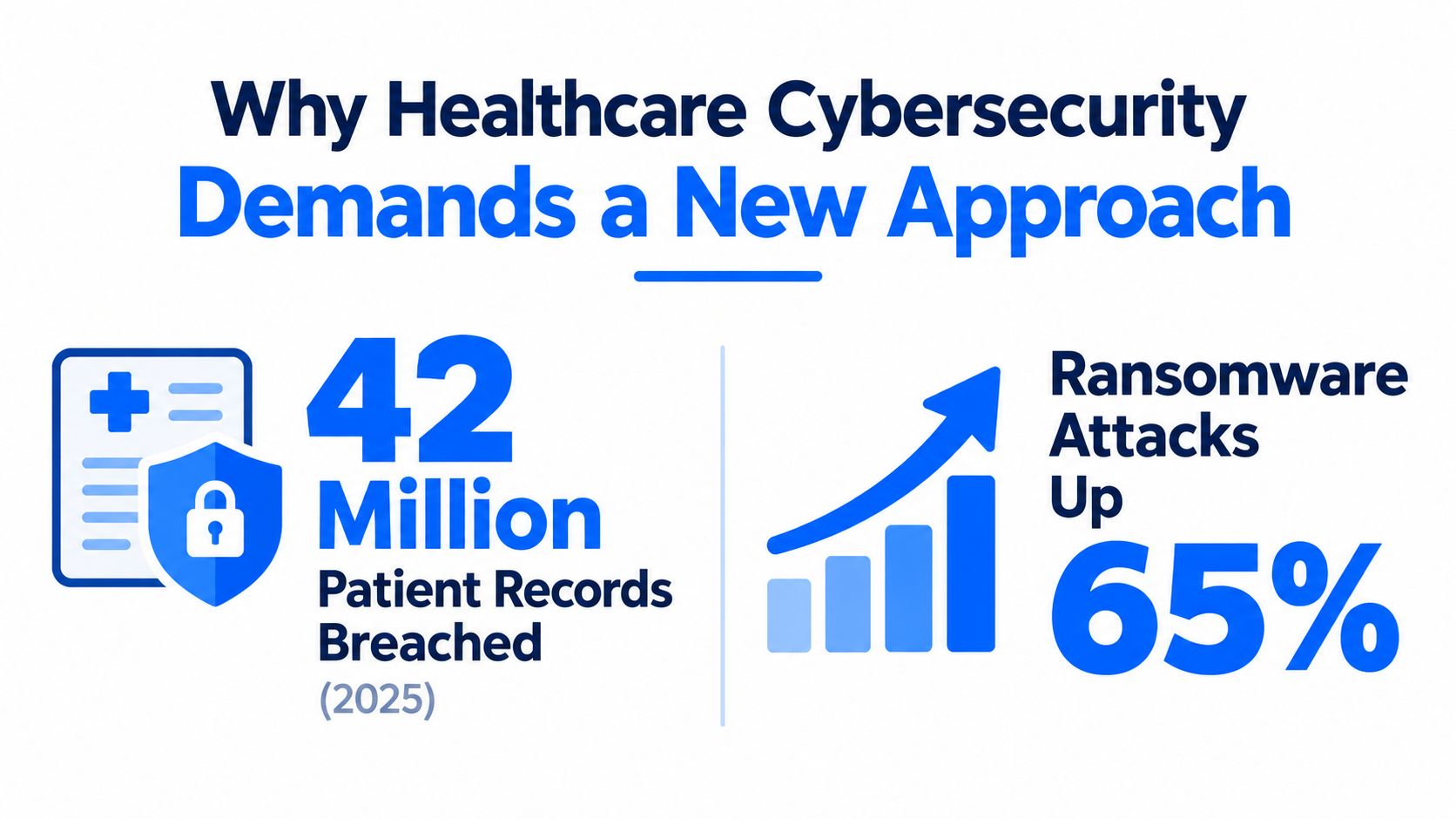
The reported scale is now impossible to treat as a background IT concern. Healthcare recorded 772 breaches involving 500 or more records in 2025, the highest annual total on record, surpassing 746 breaches in 2023 and affecting about 139.7 million people, according to healthcare cyber risk reporting from Gallagher Bassett. The same source reports that ransomware represented 54% of health-sector incidents in ENISA's threat picture, while 43% of ransomware incidents were paired with data theft or a data breach.
Patient care changes the risk calculation
A retailer may close a service temporarily after an intrusion. A hospital may need to divert patients, delay procedures, work from downtime documentation, or operate without normal diagnostic access. The security team therefore has to weigh containment decisions against clinical workflows, not just data confidentiality.
That requirement makes healthcare different in three important ways:
- Availability carries clinical consequences: An unavailable EHR or imaging system can slow decisions that depend on current patient information.
- The environment contains difficult assets: Medical devices and operational technology may run on old platforms, support limited security tooling, or require vendor involvement for changes.
- Trust is distributed: Employees, clinicians, contractors, software providers, device manufacturers, billing partners, and support teams may all interact with sensitive systems.
Practical rule: Treat every security control as a clinical operations decision. If a control blocks legitimate care, staff will bypass it, and the organization will create a different risk.
Prevention is only one control objective
Traditional perimeter defense assumes the organization can identify and stop the threat before it enters. That assumption no longer fits a health system whose users work remotely, suppliers connect to applications, and devices communicate across multiple network zones.
A durable program has four objectives:
- Prevent unauthorized access with strong identity controls, secure configurations, and layered protection.
- Detect suspicious behavior across users, endpoints, devices, vendors, and cloud services.
- Contain an incident so one compromised account or device can't reach the entire clinical environment.
- Recover critical services through tested, independent restoration paths.
The shift is from cybersecurity as an IT expense to cybersecurity as an operational continuity function. Boards and clinical leaders should ask whether the organization can maintain safe care during an attack, how quickly it can identify affected systems, and whether vendors are included in the answer. Those questions produce better investment decisions than asking whether the organization has purchased another security appliance.
Understanding Healthcare Regulatory Requirements
Healthcare regulation should shape architecture and governance, not sit in a compliance binder. HIPAA and HITECH expectations push organizations toward administrative safeguards, access controls, auditability, risk analysis, and breach response. GDPR and other privacy regimes can add obligations where organizations handle information connected to people in relevant jurisdictions. A useful overview of HIPAA, GDPR, NIST, and breach laws can help teams compare the regulatory themes before translating them into control requirements.
The practical mistake is treating each rule as a separate technology project. A single capability, such as centralized identity governance, can support least privilege, audit evidence, incident investigation, and operational risk reduction at the same time. Procurement should therefore map requirements to outcomes rather than buy products because a vendor says “compliant.”
Build from risk, not from a checklist
Start with an inventory of protected data, clinical systems, connected devices, privileged accounts, and third parties. Then document who needs access, why they need it, how access is approved, and what happens when the role or relationship ends.
A useful control map includes:
- Identity and access: Require individual accounts, strong authentication, role-based access, timely deprovisioning, and privileged-session oversight.
- Data protection: Apply encryption, retention rules, secure disposal, and access logging according to the sensitivity and movement of the information.
- Risk management: Record known vulnerabilities, compensating controls, vendor dependencies, and the owners responsible for remediation.
- Incident response: Define escalation paths that include privacy, legal, clinical operations, communications, executives, and external responders.
- Evidence and testing: Preserve logs, approval records, training records, risk decisions, recovery tests, and corrective actions.
Organizations moving workloads to cloud environments should also connect migration decisions to control ownership. This case study on achieving HIPAA compliance through cloud migration illustrates why compliance discussions need to include architecture, process, and accountability rather than software alone.
Medical device regulation made security a lifecycle issue
Medical-device cybersecurity became a formal product-lifecycle concern through regulatory milestones. The FDA's Center for Devices and Radiological Health began publishing cybersecurity-related guidance in 2005, expanded its framework with premarket submissions and quality-system considerations in 2014, issued postmarket guidance in 2016, and made further updates in 2018 and 2022. Europe issued the Medical Devices Regulation in 2019, while Japan's PMDA released its first medical-device cybersecurity documentation in 2015, with updates in 2018 and 2022, as documented in this overview of medical-device cybersecurity regulation.
For health systems, the implication is direct. Device security belongs in procurement, deployment, maintenance, network design, vendor management, and retirement planning. A purchase review should ask how the manufacturer handles vulnerabilities, credentials, updates, logging, remote support, and end-of-life exposure.
Compliance is continuous because the environment changes continuously. New interfaces, acquisitions, contractors, cloud services, and devices can alter the risk profile without changing the organization's formal policies. The CISO should report control performance and unresolved exposure to leadership, not just report that policies exist.
Mapping Core Cybersecurity Solution Categories
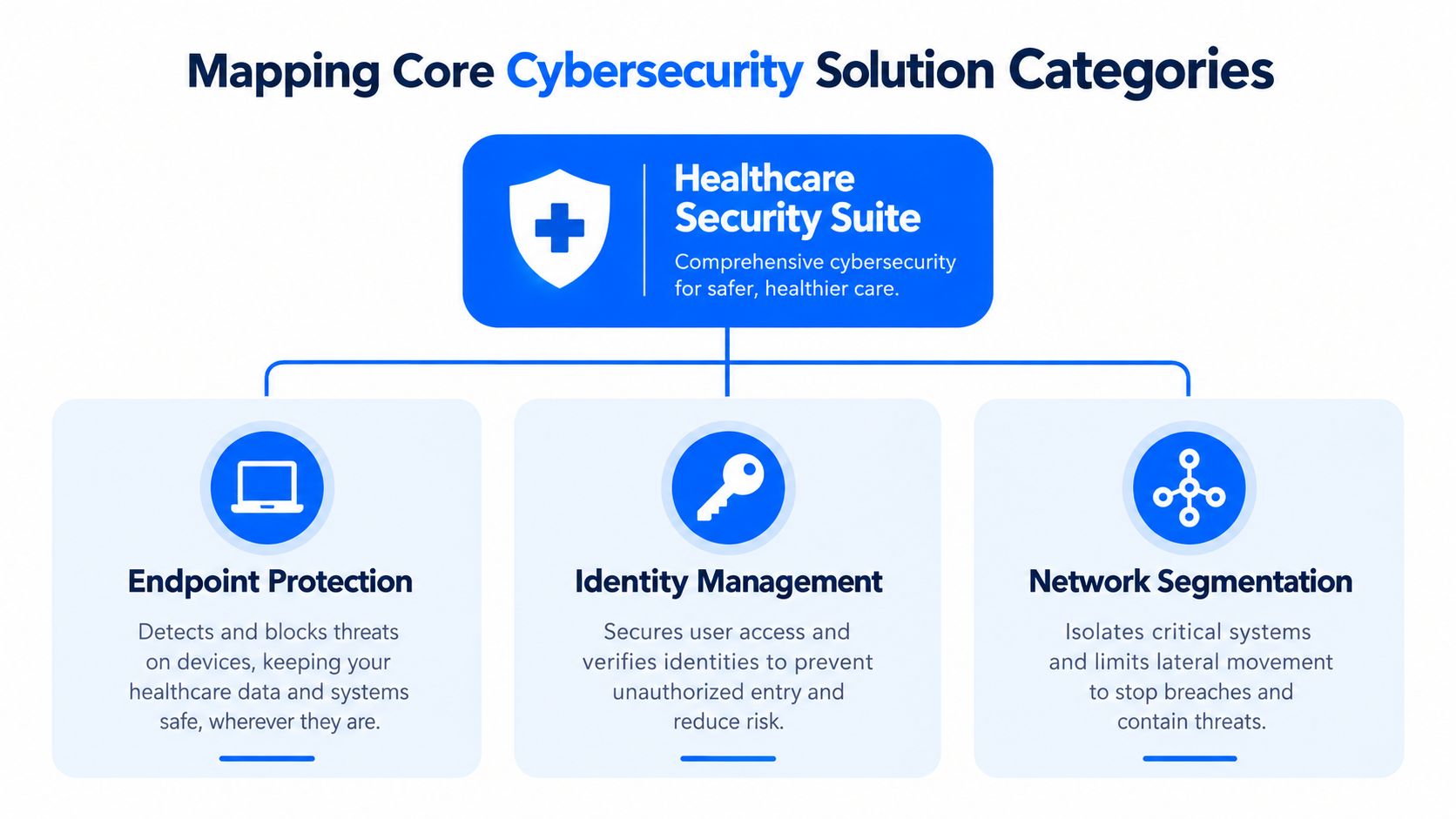
No single platform provides healthcare security. Each category solves a different problem, and the value comes from how the controls work together. A hospital with strong endpoint protection but weak identity governance still has an account problem. A health system with excellent identity controls but flat networks may still allow a compromised workstation to reach critical systems.
Match the category to the failure you need to prevent
| Solution category | Primary problem addressed | Buying question |
|---|---|---|
| Endpoint protection platform | Known malware, unsafe applications, and device policy violations | Can it protect supported and constrained clinical endpoints without disrupting care? |
| Endpoint detection and response | Suspicious behavior that bypasses preventive controls | Can analysts investigate activity and isolate a device with appropriate clinical safeguards? |
| Identity and access management | Excessive, stale, shared, or poorly protected access | Can the organization enforce least privilege across workforce, service, vendor, and privileged accounts? |
| SIEM | Fragmented security events and weak investigation context | Can it collect useful signals without overwhelming a small security team? |
| Managed detection and response | Limited internal monitoring and response capacity | Does the service provide accountable escalation and healthcare-aware response procedures? |
| Encryption | Unauthorized disclosure of data at rest or in transit | Are keys, access policies, backups, devices, and integrations governed consistently? |
| Governance and risk management | Unowned decisions, inconsistent controls, and weak evidence | Can leaders see risk, exceptions, remediation status, and business impact? |
Endpoint protection platforms remain necessary, but they shouldn't become the center of the program. EDR adds behavioral visibility and investigation, while a SIEM can correlate identity, endpoint, network, cloud, and application signals. These tools need clear ownership. A SIEM that nobody reviews is an expensive archive, and EDR without a response process only describes an incident after the fact.
Put identity ahead of product accumulation
Healthcare leaders should prioritize phishing-resistant multifactor authentication, conditional access, privileged access management, and lifecycle automation. More than 90% of cyberattacks against healthcare are phishing-based, and 45% of healthcare cybersecurity professionals reported phishing as the cause of their most severe breach, according to healthcare cybersecurity guidance from HIPAA Journal. The same source identifies email and social-engineering variants such as spear-phishing, vishing, whaling, and business-email compromise as dominant incident patterns.
Identity controls should cover employees, clinicians, service accounts, contractors, and vendors. Require a documented owner for every privileged account, review access based on role and risk, and route remote support through controlled access points. Messaging systems also deserve attention because staff may send sensitive information through channels that weren't designed for clinical privacy. Teams evaluating secure patient communications can review guidance on protecting patient data with Call Loop as part of that broader control discussion.
Network architecture belongs in the same decision. An SD-WAN security approach may help multi-site organizations apply consistent policy across facilities, but it isn't a substitute for segmentation, identity enforcement, monitoring, or tested response. Buyers should evaluate integration, policy consistency, logging, failover, and operational ownership instead of treating network modernization as a security outcome by itself.
Building Resilient Architecture Patterns for Health Systems
Resilient healthcare architecture assumes that one control will fail. A user may approve a convincing phishing message. A vendor account may be compromised. A medical device may contain an unpatched weakness. The design objective is to prevent that event from becoming a system-wide clinical outage.
Segment the environment around clinical function
Network segmentation groups assets according to defined criteria and allows only authorized traffic. Healthcare organizations should separate EHR or EMR infrastructure, PACS, pharmacy systems, administrative services, guest access, and IoT or operational technology where clinical workflows permit. Microsegmentation adds narrower controls around particularly sensitive workloads and limits lateral movement after an endpoint compromise.
Guidance on implementing zero trust in healthcare emphasizes micro-perimeters, strict access controls, and identity management around critical assets. The design should also account for the fact that medical devices may need specific communications with servers, imaging systems, or vendor platforms. Blocking everything is not a strategy if clinicians lose access to required data.
Remote support needs the same discipline. Put vendors behind MFA-protected jump hosts or controlled proxies, grant access only for an approved purpose and period, record sessions where appropriate, and remove access when the work ends. Don't give a supplier a broad network route merely because its application is important.
Design the response path before the incident
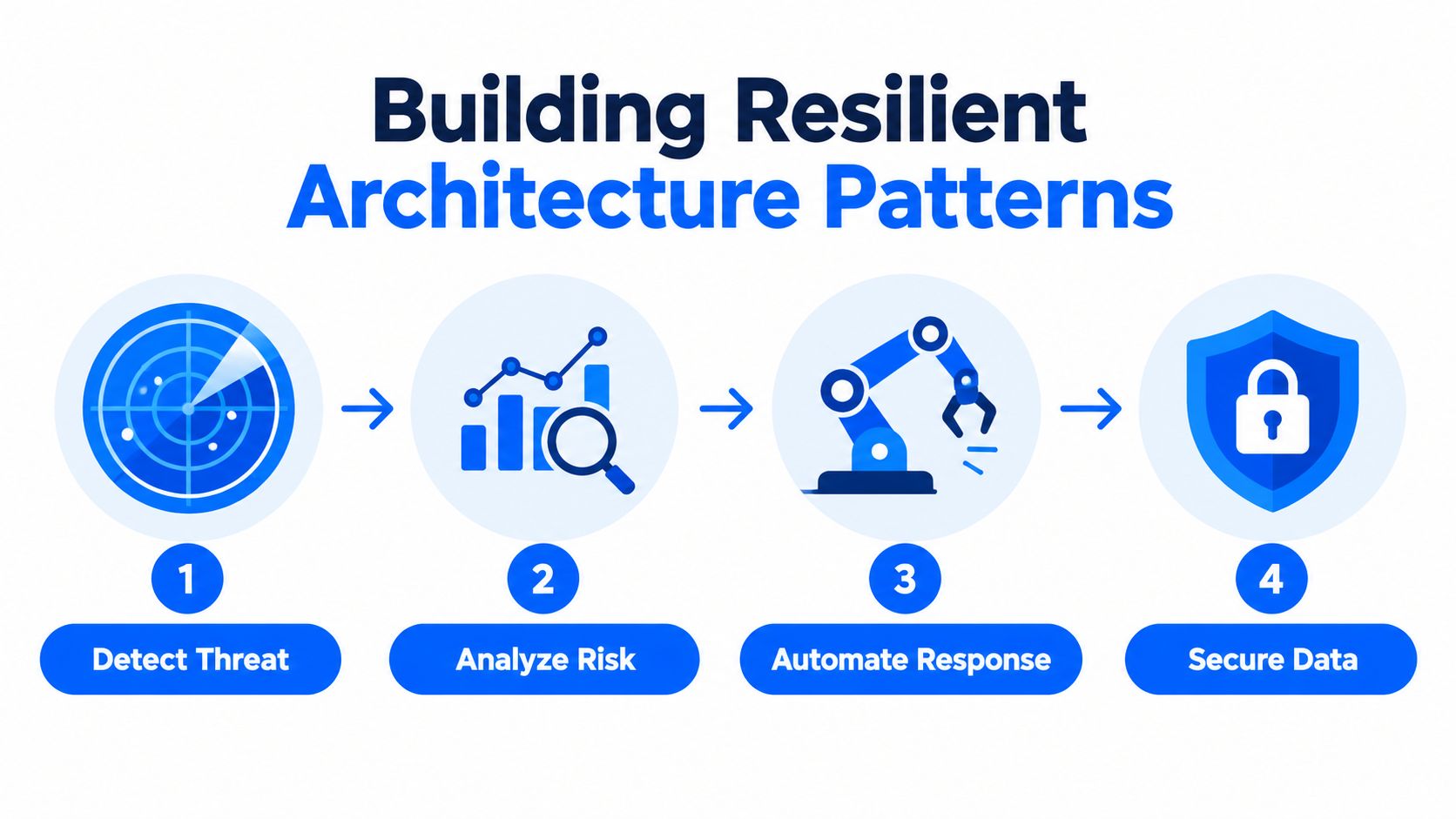
A resilient pattern connects detection, analysis, response, and recovery:
- Detect threat: Collect useful signals from identity providers, endpoints, network controls, cloud services, and critical applications.
- Analyze risk: Establish whether the activity affects a user account, a device, a vendor pathway, or a clinical system.
- Automate response carefully: Disable a compromised account or isolate a workstation when the action won't interrupt patient care. Route high-impact actions to human approval.
- Secure data and restore: Maintain protected backups, recovery procedures, and alternate workflows that clinical leaders have tested.
A security team should know which systems it can isolate automatically and which systems require clinical approval before containment.
Zero trust doesn't mean forcing clinicians through endless prompts. It means making access decisions based on identity, device condition, location, application, and requested resource, then applying controls proportionate to the risk. A nurse moving between care areas and a vendor administering a specialized device shouldn't receive identical access treatment.
Recovery paths should be independent enough that an attacker who compromises production credentials can't delete or encrypt the backups. Test restoration with the people who will operate during downtime, including clinical, pharmacy, laboratory, communications, and executive teams. Recovery readiness is measurable through evidence of successful exercises, clear ownership, and documented improvements, not through a policy statement.
Addressing the Hidden Risks in Healthcare Cybersecurity
Ransomware deserves serious attention, but it has crowded out the risks that often make ransomware possible. Healthcare organizations need to focus harder on identity weaknesses, privileged-account hygiene, and third-party exposure. These risks cross technical and organizational boundaries, so a point product won't solve them.
In 2026, Fortified reported that healthcare organizations found four times more identity and access-control vulnerabilities than during the same period in 2025. It also found that 92% of healthcare network domains had an administrator account whose password hadn't been updated in more than three years, according to reporting on healthcare identity and supply-chain risk.

Privileged access is an operating risk
An administrator account is not just an IT credential. It may control clinical applications, network devices, identity systems, backups, or vendor integrations. If the account is shared, overprivileged, poorly monitored, or left active after a role change, the organization has created an unbounded path through its environment.
Fix the basics first:
- Remove standing privilege: Grant administrators heightened access only when the task requires it, with approval and session visibility.
- Eliminate shared accounts: Assign individual identities so the organization can attribute actions and terminate access precisely.
- Protect recovery administrators: Separate backup and disaster-recovery privileges from normal production administration.
- Review service accounts: Document owners, rotate credentials, restrict permissions, and replace static secrets where the application supports safer methods.
- Measure exceptions: Track accounts that cannot meet the standard, assign a risk owner, and set a remediation date.
Phishing-resistant MFA is especially important for administrators and remote vendors. Conditional access should consider device health and the sensitivity of the requested resource, not merely whether the user entered a password successfully.
Treat suppliers as connected operations
The Fortified reporting also found that supply-chain risks increased sixfold year over year, with nearly two-thirds classified as critical or high severity. It reported that 85% of healthcare practices experienced at least one third-party or vendor-of-vendor disruption in the prior year, while 63% lacked continuous monitoring of digital supply chains.
The answer isn't to reject every supplier. It is to classify vendors by access and clinical dependency, require security obligations that match the risk, monitor material changes, and maintain an exit or continuity plan. Vendor reviews should cover remote access, subcontractors, identity lifecycle, vulnerability handling, incident notification, data location, backup responsibility, and service restoration.
A quarterly questionnaire can't show whether a vendor's exposure changed yesterday. Continuous visibility, contractual accountability, and an owner inside the health system create a stronger control than procurement paperwork alone. Vendor risk belongs in the same governance forum as clinical continuity and enterprise risk because supplier failure can interrupt care even when the health system itself wasn't directly breached.
Evaluating and Governing Healthcare Cybersecurity Solutions
Buy cybersecurity solutions against operational outcomes, not vendor categories. A useful evaluation starts with the failure you need to prevent or contain. “We need a SIEM” is incomplete. “We need reliable detection and escalation for privileged-account misuse across multiple facilities, with a response path that doesn't interrupt critical care” is a buying requirement.
Use a disciplined evaluation sequence
First, establish the current state. Inventory assets, identities, data flows, vendors, clinical dependencies, unsupported systems, and recovery paths. Identify where the organization lacks visibility. You can't select a sensible control for an environment you haven't mapped.
Second, rank the exposures. Put identity, privileged access, third-party connectivity, medical-device constraints, backup independence, and clinical downtime risk into one register. Assign business owners, not only technical owners. A risk without an accountable owner becomes a recurring audit finding.
Third, define acceptance criteria. Require vendors to demonstrate workflows using realistic scenarios. Test a suspicious vendor login, a compromised workstation, a disabled account, an unavailable integration, and a restoration exercise. Ask what the product does when telemetry is missing, the network is degraded, or an administrator is unavailable.
Fourth, calculate operating burden. Include implementation, integration, tuning, analyst workload, alert escalation, maintenance, training, licensing, and exit costs. A tool that produces more alerts than the team can triage will reduce security performance even if its feature list is impressive.
Fifth, verify the provider. Review financial stability, support coverage, security practices, subcontractors, incident obligations, data handling, service levels, and references relevant to complex healthcare environments. Demand clarity about what the provider monitors, what it expects the customer to do, and who makes containment decisions.
Govern the solution after purchase
Implementation is the start of accountability. Create a control owner, service owner, clinical stakeholder, vendor contact, and executive sponsor. Report a focused set of measures such as privileged-access exceptions, unresolved critical findings, vendor access status, detection coverage, response exercise results, recovery test outcomes, and overdue remediation.
A fractional security leadership model can help organizations that need experienced direction without immediately building a larger executive structure. Fractional CISO services from MR2 Solutions are one example of an advisory option for security strategy, governance, technology evaluation, and implementation oversight.
Use governance meetings to make decisions, not merely review dashboards. Approve risk exceptions with an expiration date, fund remediation according to clinical impact, and require vendors to demonstrate progress. Run tabletop exercises with executives and clinical leaders, then convert each gap into a named action.
The right cybersecurity solutions for healthcare form a managed system. Identity controls reduce unauthorized access, segmentation limits spread, monitoring shortens investigation, vendor governance reduces hidden dependency, and recovery testing protects care when prevention fails. A health system should renew or expand a solution only when it can show how that solution improves one of those outcomes.
MR2 Solutions helps healthcare organizations assess cyber risk, compare vendor-neutral technology options, coordinate implementation, and govern security programs over time. Visit MR2 Solutions to discuss a practical approach to identity, third-party risk, resilience, and healthcare cybersecurity procurement.